Our curiosity won over convenience
Nutrition is the foundation of a healthy life—not just for humans, but for dogs as well. At KIVO Petfood, we believe in the power of high-quality, natural ingredients and do not add synthetic vitamins to our fresh sausages. Synthetic vitamins are lab-created versions of natural vitamins. But why do we consciously avoid synthetic vitamins in our frozen meals? What is the actual difference between natural and synthetic vitamins? And how do they impact your dog's well-being? In this blog, we delve deeper into these questions and support our vision with insights from science.
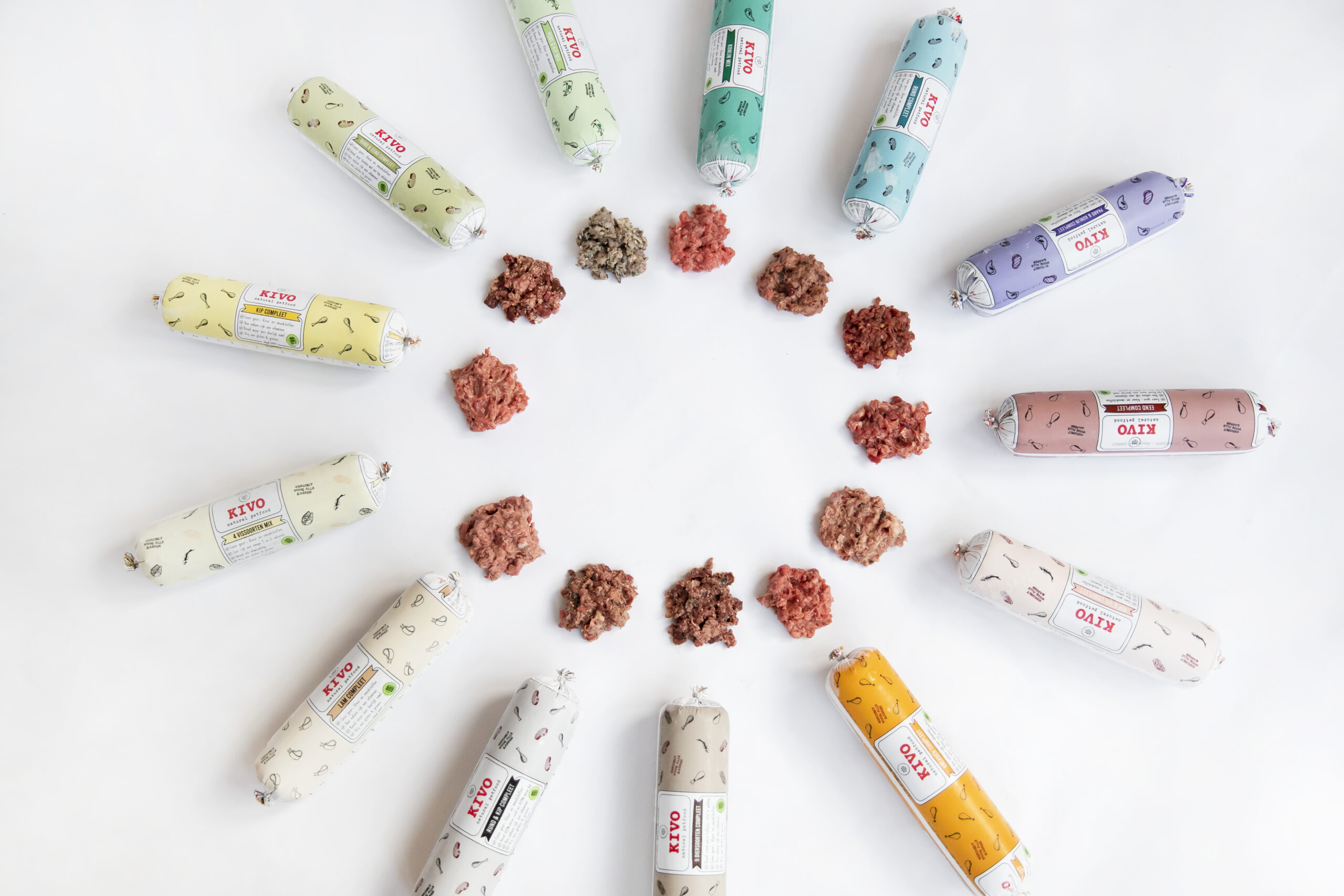

Nutrition forms the foundation of a healthy life – not just for humans, but for dogs as well.
Synthetic Vitamins in Dog Food: Why?
During the production of processed dog food, such as kibble and canned food, many natural vitamins are lost. This is due to the heating process required to extend the shelf life of these products (1). Many essential nutrients, including vitamins, are heat-sensitive and break down at high temperatures. To ensure that the final product still contains sufficient nutrients, manufacturers must add a blend of synthetic vitamins—better known as a premix. This artificial supplement is intended to compensate for the lost nutrients.
In the production of fresh meat-based dog food, such as raw complete meals (KVV), heating is not required. As a result, all natural vitamins remain intact. However, some manufacturers still add a premix without first analyzing which vitamins are naturally present in the meat. This can disrupt the nutritional balance, making it less aligned with a dog’s natural needs. We think that’s a shame!
Natural vs. Synthetic: Absorption and Effectiveness
The difference between natural and synthetic vitamins is not only in their origin but also in how the body absorbs them. Research shows that vitamins from whole foods are absorbed more efficiently than synthetic alternatives (2,3,4,5). This is because natural vitamins are bound to other compounds that support absorption, whereas synthetic versions are isolated and therefore processed less effectively.
The difference between natural and synthetic vitamins is not only in their origin but also in how the body absorbs them.
Over time, dogs have developed a digestive system fully adapted to animal-based products and natural nutrients. Whether it’s vitamin A from liver or vitamin D from fatty fish, when vitamins are provided in their natural form, the body absorbs them more efficiently than their synthetic counterparts. That’s why we consciously choose natural ingredients that precisely match your dog’s needs.
The benefits of natural vitamins may suggest that you can never have too much of them—but nothing could be further from the truth!
More Is Not Always Better: The Risks of Overdosing
While vitamins are essential, an excess can be harmful (6). This is especially true for fat-soluble vitamins such as vitamins A, D, E, and K. Since these are stored in fat and liver tissues, they can accumulate when consumed in excess. This buildup can lead to health problems such as bone abnormalities, kidney issues, and liver stress (7,8,9,10).
Additionally, too much of one vitamin can interfere with the absorption of another. Some vitamins compete for absorption. For example, an excess of vitamin A can reduce the absorption of vitamin D (11). Moreover, a continuous high intake of synthetic vitamins can make the body less efficient at absorbing vitamins from natural sources (12), potentially leading to deficiencies over time.
In short, it’s all about the right balance. That’s why we rely on the nutritional value of our ingredients rather than synthetic additives. No artificial tricks—just pure nature!
How We Objectively Measure What’s in Our Food
To ensure that our food meets your dog’s needs, we base our formulations on thorough laboratory analyses. Our process consists of the following steps:
Our analyses show that our sausages are naturally packed with essential nutrients. This doesn’t mean that every meal strictly adheres to FEDIAF guidelines, but that’s not necessary either. Just like with any balanced diet, variety is key. Dogs don’t need an exact amount of every nutrient every single day, as long as their diet provides sufficient nutrients over time. The body has storage mechanisms and regulatory processes to handle fluctuations in nutrient intake (13). That’s why, for example, eating fatty fish just once can provide enough vitamin D for an entire week!
Our analyses show that our sausages are naturally packed with essential nutrients.
A Balanced Weekly Menu
Because variety is so important, we have created unique weekly meal plans. These menus are based on laboratory analyses and aligned with FEDIAF guidelines, ensuring that dogs receive all essential nutrients throughout the week. This prevents both overdosing and deficiencies—without requiring you to do any complicated calculations.
What Makes Our Weekly Menus Special?
✔ Thorough laboratory analyses—no guesswork.
✔ Fully balanced menus—you just have to feed.
✔ Options without chicken or beef, plus puppy menus—still with zero premix added.
Feeding as Nature Intended
At KIVO, we believe in nutrition the way it’s meant to be—pure, natural, and delicious. Easy for you, healthy for your dog. Objectively analyzed and demonstrably balanced. Because if nature already has it figured out, why should we do things any differently?
If nature has it right, why should we do things any differently?
References
Meer lezen
How much raw food does a dog need?
One dog looks at you as if they haven't eaten in three weeks. Another casually leaves some food behind as if it's no big deal. So yes, how much raw food a dog needs can vary quite a bit from one dog to another. Fortunately, there are some general guidelines that provide a good starting point.
Diarrhoea in dogs: what can you do?
You turn around for just a second during your walk and suddenly there's a complete disaster waiting for you on the grass. Yep... your dog has diarrhoea. Definitely not the highlight of your day. Fortunately, diarrhoea in dogs is usually nothing serious and often clears up on its own within a few days. Still, it's helpful to know what can cause it, what you should do and when it's time to give your veterinarian a call.
Dull Coat in Dogs: What Can You Do?
Normally your dog's coat shines as if they just stepped out of a shampoo commercial. Then suddenly it starts looking dry, dull or simply a little lacklustre. A dull coat is quite common in dogs and is often a sign that something is out of balance. Sometimes it's only temporary, such as during shedding season. But if the coat remains dull for a longer period, it may indicate nutritional deficiencies, skin problems or another underlying issue.